Should you use AI videos for your brand?

Videos have become a central part of most content strategies that can be used to grow your business. Video is often the right medium to reach out to your audience. We at MakeReels.in have seen a huge uptick in video-led content strategies for consumer applications, and we see a budding trend in B2B segments as well. However, creating a video from scratch can take over a month and over ₹1,00,000 in editor fees, set and production costs. AI has been positioned as the quick and cheap alternative, and many teams wonder if it can become their primary video production strategy. The short answer is: yes, it can be, but it cannot replace the human touch and should be used in places where the audience does not mind it.
Why do we need AI in 2026
Since 2020, video consumption has grown exponentially. This growth in video consumption has made video a great medium to reach your audience. Given the recent boom in AI video models, we are at an inflexion point where AI models have gotten good enough to be considered for serious productions.
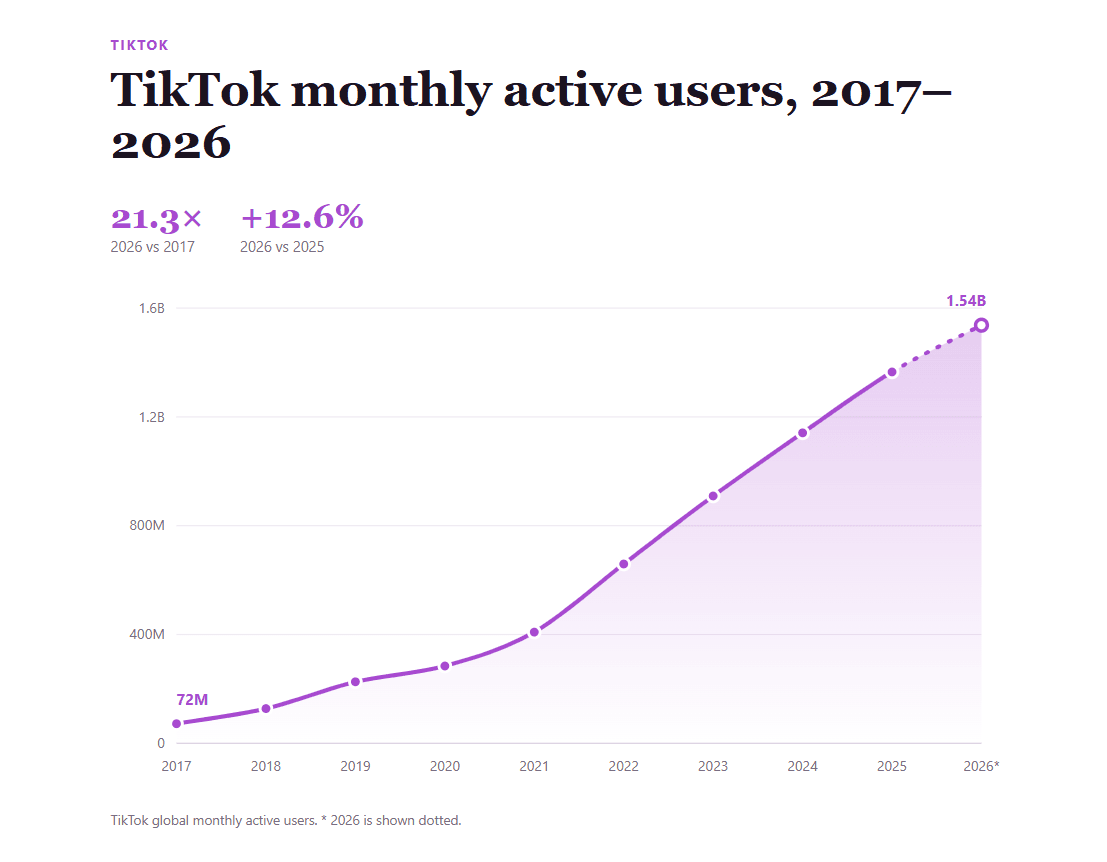
In the world of short-form content, generating good-quality content at high volumes is the best strategy. The brands that publish more often maintain higher relevance and garner more views. A few big brands like Subway Surfers and Duolingo have undertaken massively successful content strategies that revolve around posting frequency, proving that posting frequency matters.
Using AI tools can help you reduce your effort, but if overdone, it can make your brand look cheap or inauthentic. You need to understand the audience and build some trust with the audience, which cannot be done with AI alone.
Where to use AI videos
AI videos are not a shortcut; they are a purpose-driven tool. Using AI videos everywhere will result in negative brand impact. Rather, build a video strategy which uses a mix of AI-edited videos and AI-generated videos. Here are different use cases and scenarios in which you can use AI tools for your video strategy.
AI Edited Videos
Instead of letting AI generate the whole content, it makes a lot of sense to allow AI to edit your videos. This is the best move, long term. Manual edits take time and often need to be sent to a 3rd party service provider for video editing. Using AI tools lets you keep the process in-house and can help speed up your production cycle by weeks. Products like MakeReels.in and Cardboard are already doing this today! Using this method for thought leadership content and talking head content would be a great fit.
AI Hooks
A hook is the initial part of the video, roughly around the first 5-10% of the video; this is generally used to get the viewer's interest and hook them for the rest of the video. Using AI to improve the hook is a great idea, since AI can generate attention-grabbing videos. This method can be applied to both sit-down long-form videos and short-form content. AI hooks can be a great strategy for retention.
AI Trends
In recent months, many popular social media trends are also AI video trends. For example, the AI-generated Fruit Love Island trend uses AI models to create hilarious skits between fruits. These trends seem to go viral pretty quickly, and brands can capture this trend by using the popular characters of these trends in videos around your product. This can help position your brand alongside the trend, but this should be done carefully since some of these characters might be under copyright protection.
AI Product Videos
Generating product videos has become very simple with AI tools. Put in 4 different angles of your product into a video model, and you're almost guaranteed to get a decent 30-second clip. In most cases, an AI-generated product clip is indistinguishable from a studio-made product video. Almost everyone can use a good product video; it can replace a long, technical, and often overlooked product brochure.
Where do AI videos backfire?
While AI videos can solve a lot of problems in the current media production landscape, it's important to understand where AI is welcome and where AI is not. Culturally, AI-generated content is still not widely accepted. If your customer expects human-generated content, do not try to pass AI-generated content as human-generated content.
Inauthentic AI-generated UGC
AI-generated UGC has been one of the most popular use cases of AI videos in GTM and marketing. The strategy can work in some places, but I'd advise you to try and build genuine UGC before trying out AI UGC, and if you must, then try to use real customer feedback to model your UGC and not just your own marketing lines.
Brand Drift
AI videos, just like other AI models, are susceptible to hallucinations. These hallucinations show up as extra fingers, physically impossible motion/movement and brand distortion. AI models drift a little every second; for a 120s video, the final frame of the video could end up changing the colours/logos to a point where it no longer represents your brand.
Health or Finance
Don't use AI videos for health and well-being or finance; these are critical topics that should be properly planned and recorded with experts. AI can give out misleading information.
AI impersonation
Not only is AI impersonation a violation of copyright in many cases, it is ethically wrong. Even if you use AI to copy your own likeness, it can backfire. Taking shortcuts early on can harm your brand. Take the latest kwebbelkop controversy; you can see how audiences are not willing to watch AI content that resembles the real person. Your connection with the audience is not to your likeness but rather to your personality and your brand. AI can never replace all of it.
Conclusion
While AI videos can be the sole media that you post, it's advisable to view it more as a tool than a shortcut. Using AI videos does not automatically make your content better. AI reduces the barrier to entry for video production.
Instead of using AI everywhere in your content strategy, use AI to speed up editing and try to build a strategy where some of your videos can be AI-generated videos. This will help you focus more on some pieces of good content and still produce a decent number of content pieces. As a thumb rule, do not use AI if the viewer expects a human on the other end. Using AI for informational videos or product videos is quite acceptable and can help you focus more on videos that need more of your attention.
Here's something that you can do this week:
- Create a weekly posting schedule with 2 AI-generated posts a month and 2-3 original posts, giving you one video per week.
- Log on to an application like MakeReels.in and generate your AI content and keep it ready to post
- Find 2 topics to talk about and record the content on your phone. Upload the content to an AI video editor like MakeReels.in and see how our AI agent edits your content.
And just like that, within 8 hours of work, you have a whole month's worth of content.